

Low Back Pain - what it is and why we should pay attention
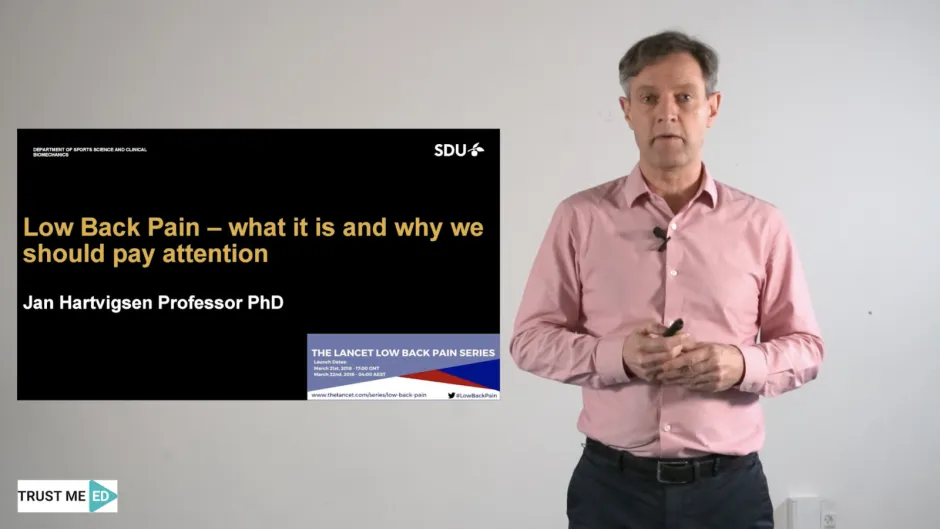
The Lancet Low Back Pain Series published in March 2018 was the highest profile series of papers ever published on low back pain globally. In the papers, an international multidisciplinary team of experts outlined the growing burden of low back pain, discussed what low back pain is, the evidence for management of low back pain, and the evidence-practice gap that exists globally. Finally, the team published a “Call to action” arguing that disability from low back pain cannot be separated from social and economic factors and personal and cultural beliefs. Therefore, both decision makers in individual countries, clinicians and global organizations such as the WHO need to take action to reduce this increasing and costly public health epidemic. In the three-part lecture series, Professor Jan Hartvigsen, who was vice-chair of the Lancet Low Back Pain Series Steering Group, tells about the content of the series and its implications for patients, clinicians and societies.
No comments yet…